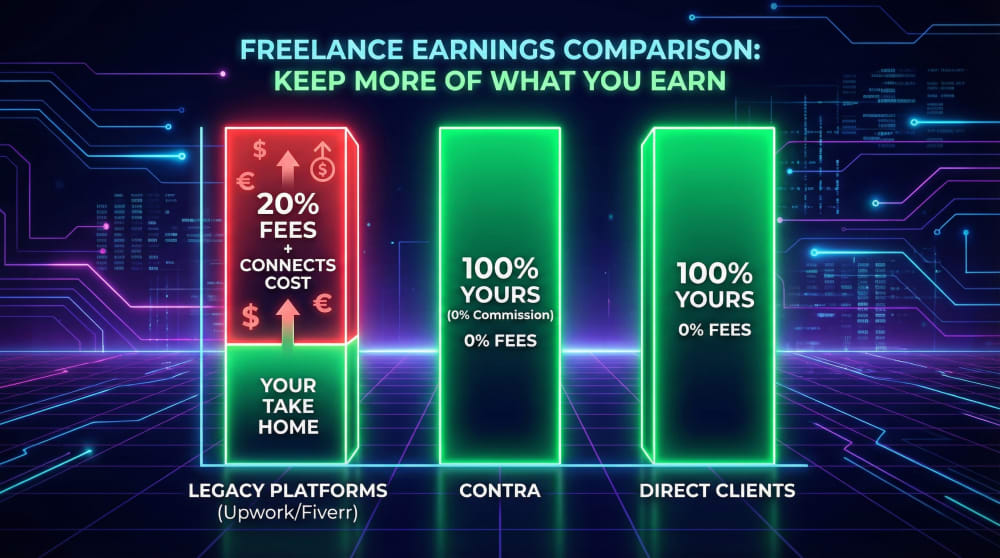
You are bleeding money. It is a harsh truth, but if you are still relying exclusively on Upwork in 2026, you are participating in a "pay-to-lose" economy. With the recent Upwork connects cost 2026 updates pushing prices upwards of $0.15 each, the platform model has fundamentally broken for independent contractors.
When a single premium job listing requires 20 to 30 Connects, the Upwork connects cost per proposal means you are essentially paying $3 to $5 just for the privilege of handing someone your resume. That is not freelancing; that is gambling with worse odds than a casino.
At DevMorph, we escaped the platform rat race years ago. The winners in 2026 are the developers and designers who control the client relationship. If you have been reading our guide on why your skills aren't making you money, you know that the platform itself is often the bottleneck. It is time to diversify and move toward zero-commission platforms and direct client acquisition.
1. The "Zero-Commission" Revolution: Contra
If you are searching for the absolute best Upwork alternatives in 2026, Contra is leading the charge. While legacy platforms tax you 10% to 20% on every single dollar you earn, Contra operates on a revolutionary commission-free model for freelancers.
- 100% Revenue Retention: You charge $1,000; you keep $1,000. The client pays a small processing fee, protecting your margins.
- Portfolio-First Discovery: There are no hidden algorithms burying your profile because you didn't buy enough Connects. Your actual work speaks for itself.
- Project-Based Contracts: Contra heavily encourages clearly defined deliverables rather than vague, micromanaged hourly slogs.
2. Freelance Platforms Alternatives to Hired (The Elite Tier)
If you are a Senior Developer or a specialized software engineer, you have no business fighting for scraps on a generalist marketplace. You need to transition to pre-vetted networks.
Many senior engineers are actively looking for freelance platforms alternatives to Hired in 2026 due to changing market dynamics. Platforms like CloudDevs and Toptal are stepping up. Yes, the entry barrier is high—you will have to pass rigorous algorithmic tests and live coding interviews. However, once you are in, the dynamic completely flips:
- Zero Bidding: Clients come to you (or you are matched by a dedicated talent manager).
- Premium Rates: Rates often start at $40-$60/hour and scale significantly for AI and architecture roles.
- Stability: Engagements are typically long-term (3 to 6 months), providing actual financial security.
Pro Tip: Do not apply to these elite networks unless your technical communication is sharp. Review our comprehensive guide to starting remote work to prepare for the rigorous vetting process.
The DevMorph Escape Plan: Own Your Infrastructure
If you truly want to escape freelance marketplaces, you must build your own digital real estate. High-paying clients will not hire you off a free template or a generic platform profile. Host your professional portfolio on your own domain with your own infrastructure — it proves your technical credibility instantly and signals that you are a serious professional, not just another gig worker behind a marketplace profile.
3. The LinkedIn Search Hack (Method > Platform)
This is the most powerful strategy on this list. It requires no approval, zero fees, and absolutely no waiting. You are going to bypass the job board entirely and find startup founders who are screaming for help right now.
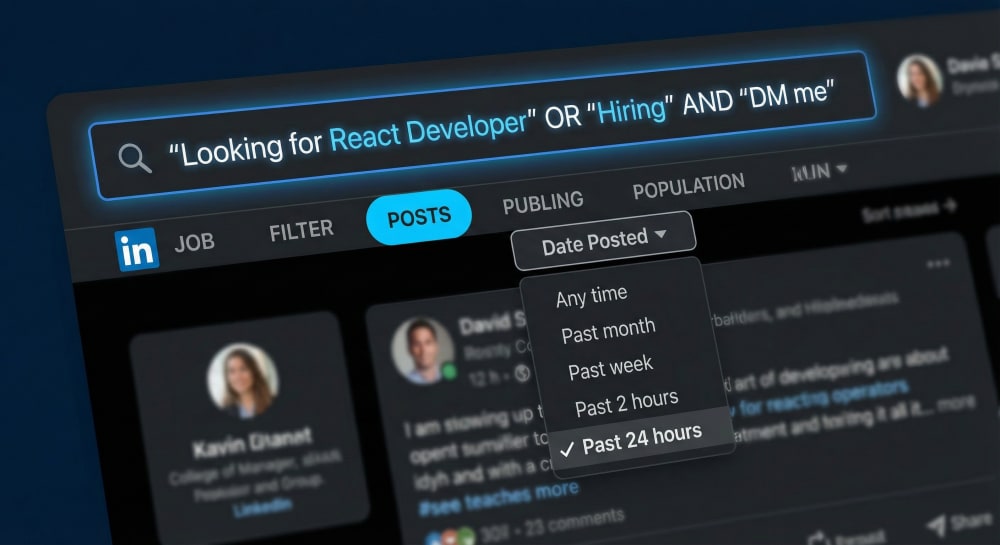
Most freelancers use LinkedIn's "Jobs" tab. That is a mistake. You want to use the "Posts" feed to find clients hiring before they even create an official job listing. Copy and paste this Boolean logic into the LinkedIn search bar (replace the role with your specific niche):
"Looking for a React Developer" OR "Hiring Freelance Writer" AND "DM me"Filter the results by clicking "Posts" and setting the date to the "Past 24 Hours". You will see fresh, highly urgent posts from founders. You aren't one of 100 proposals; you are the one person solving their problem directly in their DMs.
4. Cold Audits: The Value-First Approach
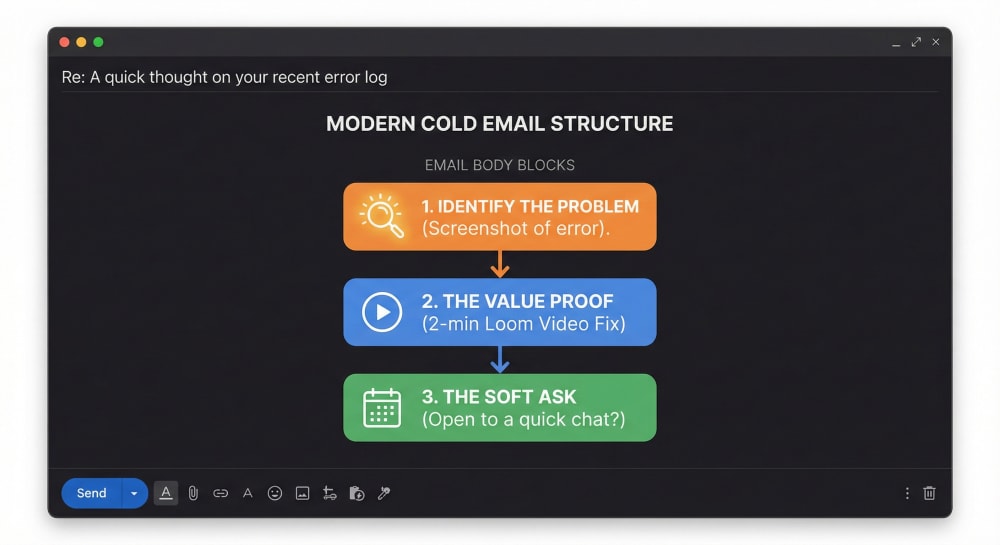
Cold emailing has a bad reputation because 99% of developers do it wrong. They send generic, automated spam. To win high-ticket clients in 2026, you must provide undeniable value before you ask for a single dollar.
- Identify a target company in your niche (e.g., a mid-sized E-commerce store).
- Find a glaring technical error on their site (broken checkout flow, atrocious Core Web Vitals, or poor mobile responsiveness).
- Record a Loom video (2 minutes max) showing the exact error and explaining exactly how you would fix it.
If you notice technical issues, you can reference the 7 common website mistakes that cost businesses revenue to validate your audit. You aren't a beggar; you are an elite consultant spotting a critical leak in their ship.
The Final Verdict
Upwork isn't completely dead, but it has become a luxury tax on your income. In 2026, the best "platform" is your ability to hunt and market your own skills.
If you want safety and modern UX, migrate your profile to Contra. If you want high-ticket consistency, grind through the vetting process for Toptal. But if you want to build a real agency that you actually own, start mastering the LinkedIn Search Hack and Cold Audits today. Stop paying for the privilege of working—go get the client.
A challenge for this week:
Pick one strategy from this list — just one — and execute it today. Not next week. The LinkedIn Boolean search takes 10 minutes. A cold audit Loom video takes 20 minutes. The developers winning in 2026 aren't the ones with the best profiles on the most platforms; they are the ones who took action while everyone else was still optimizing their Upwork bio. Which strategy are you starting with?
Disclosure: This article contains some affiliate links. If you sign up through them, we earn a small commission that helps keep this blog running — at no extra cost to you.