

Disclosure: We earn commissions when you shop through the links below.
Claude 4 vs. Gemini 2.0 Pro: The 2026 Coding Benchmark
Stop paying for hype. If you are a developer, an agency owner, or a technical founder in 2026, the AI debate has entirely shifted. We are no longer talking about who writes the best "Hello World" snippet or who generates a faster Python script. We are talking about autonomous, agentic coding. The industry has matured, and the real question isn't whether AI can code—it's which AI can seamlessly integrate into your workflow, ingest massive codebases, and fix logic bugs without breaking your entire app.
Here at DevMorph, we build custom CMS platforms, full-stack SaaS applications, and enterprise-grade tools. We've spent the last few months rigorously testing the two undisputed heavyweights in the developer ecosystem: Claude 4 (Latest Generation) and Gemini 2.0 Pro. If you've read our previous breakdown on Gemini vs Claude vs ChatGPT for coding, you know the landscape moves fast. But today, we're doing a deep dive into commercial viability and raw technical performance.
You want to know which API to pay for, which model to plug into your IDE (like Cursor or GitHub Copilot), and which system will actually save you billable hours. This isn't just a surface-level feature comparison. We are going to break down agentic evaluation scores, context window limits, and the raw economics of token pricing. Let's get into the data.

The Shift to Agentic AI: Why 2026 is Different
Before we pit these two models against each other, we need to establish the baseline of what "AI coding" means right now. In the past, AI was essentially an advanced autocomplete. Today, we are dealing with agentic workflows. An agentic AI doesn't just write a function; it reads your error logs, navigates through your directory structure, modifies multiple files, runs a test suite, and iteratively corrects its own mistakes until the build passes.
The Golden Rule of 2026 AI Development:
You do not need a single "best" AI. You need a modular workflow that leverages the specific strengths of different foundational models to optimize for both intelligence and API costs.
Claude 4: The Unrivaled Logic & Refactoring Engine
Let's start with Anthropic. Claude 4 is, without exaggeration, an absolute monster when it comes to reasoning and codebase modification. In the 2026 landscape, this is the model you want sitting next to you when you are untangling a legacy spaghetti codebase or architecting complex state management.
The numbers speak for themselves. In standardized agentic coding evaluations, Claude 4 now successfully solves over 75% of complex software engineering problems independently. This is a massive leap from the previous 3.5 Sonnet generation. It means that when you hand Claude a Jira ticket and a sandboxed environment, it can independently investigate the issue, write the patch, and submit a pull request successfully in the vast majority of cases.
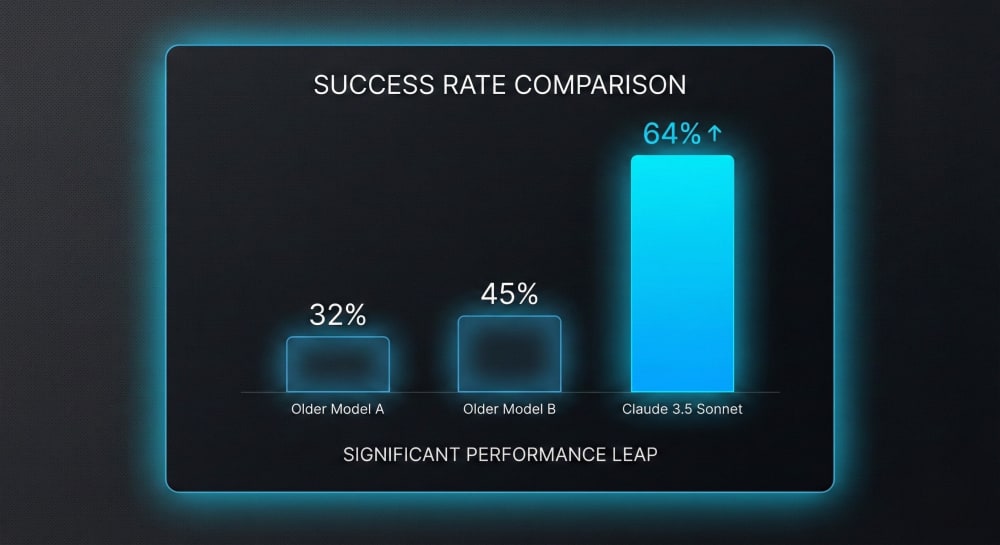
Twice the Speed, Half the Friction
When we build highly scalable, production-grade applications—like the ones we discuss in our Complete SvelteKit Tutorial for Production Apps—we rely on Claude 4 to handle our complex logic. It understands the nuances of Svelte's reactivity, Next.js server actions, and strict TypeScript interfaces better than any model on the market.
// Example: Claude 4 (Latest) excels at catching subtle async race conditions
export const load = async ({ fetch, params }) => {

  // Claude intuitively knows to use Promise.all for parallel fetching in 2026

  const [userRes, postsRes] = await Promise.all([

    fetch(`/api/users/${params.id}`),

    fetch(`/api/posts?userId=${params.id}`)

  ]);


  if (!userRes.ok) throw error(404, 'User not found');


  return {

    user: await userRes.json(),

    posts: await postsRes.json()

  };

};
Gemini 2.0 Pro: The Context Window Behemoth
If Claude 4 is a precision scalpel, Gemini 2.0 Pro is a massive industrial crane. Google took a completely different approach to the AI coding problem. Instead of optimizing purely for logic benchmarks, they solved one of the hardest engineering problems in AI: short-term memory.
Gemini 2.0 Pro features a massive, unparalleled context window supporting up to 2 million tokens natively. This is the equivalent of dropping your entire documentation, video tutorials, and codebase directly into the prompt box. For analyzing entire massive repositories, executing codebase-wide research, and planning massive migrations, Gemini is entirely unmatched.

The Economics: API Pricing & ROI Breakdown
| Feature | Claude 4 (Latest) | Gemini 2.0 Pro |
|---|---|---|
| Input Price (per 1M tokens) | $3.00 | $1.25 |
| Output Price (per 1M tokens) | $15.00 | $5.00 |
| Context Window Limit | 200,000 tokens | 2,000,000 tokens |
| Agentic Coding Score | 75%+ Success Rate | High Context Analysis |
Infrastructure: Deploying Your AI Models
Running these agentic loops requires stable, high-performance hosting. Whether you are hosting a Node.js proxy for these APIs or running local LLM instances for security, your infrastructure matters. At DevMorph, we rely on dedicated virtual machines to ensure our AI agents have zero downtime and maximum throughput.
Build Your AI Future on DigitalOcean:
For developers looking for predictable pricing and enterprise-grade performance to host their AI middleware or full-stack apps, we highly recommend DigitalOcean Droplets.
Get Started on DigitalOcean InfrastructureDevMorph's Verdict: Which AI Should You Choose?
- Choose Claude 4 when: You are tackling complex logic, writing core business algorithms, refactoring isolated components, or relying on autonomous agents to squash bugs independently.
- Choose Gemini 2.0 Pro when: You are doing codebase-wide research, planning a massive migration, or running high-volume, large-context workflows where cost and memory are major factors.
The developers who win in 2026 are not the ones who hand over their entire job to AI; they are the ones who orchestrate these models like a senior tech lead. If you're looking to scale this mindset, check out our guide on the 7 Best Freelance Platforms Alternatives to Hired in 2026.