The AI Productivity Trap
If you are learning web development right now, you are probably focusing on the wrong things. Developers are feeling entirely stuck, even with AI doing half the heavy lifting.
I know because I hit this exact wall myself. I assumed getting better simply meant grinding out more projects and memorizing complex syntax. Then AI evolved, and absolute beginners started shipping applications faster than senior engineers.
This creates a massive identity crisis. If large language models can write flawless boilerplate, what exactly are you supposed to master? It is not writing better prompts. If you are worried about the future, read our deep dive on whether AI will replace developers in 2026.
The False Choice: Vibe Coding vs Spec-Driven Development
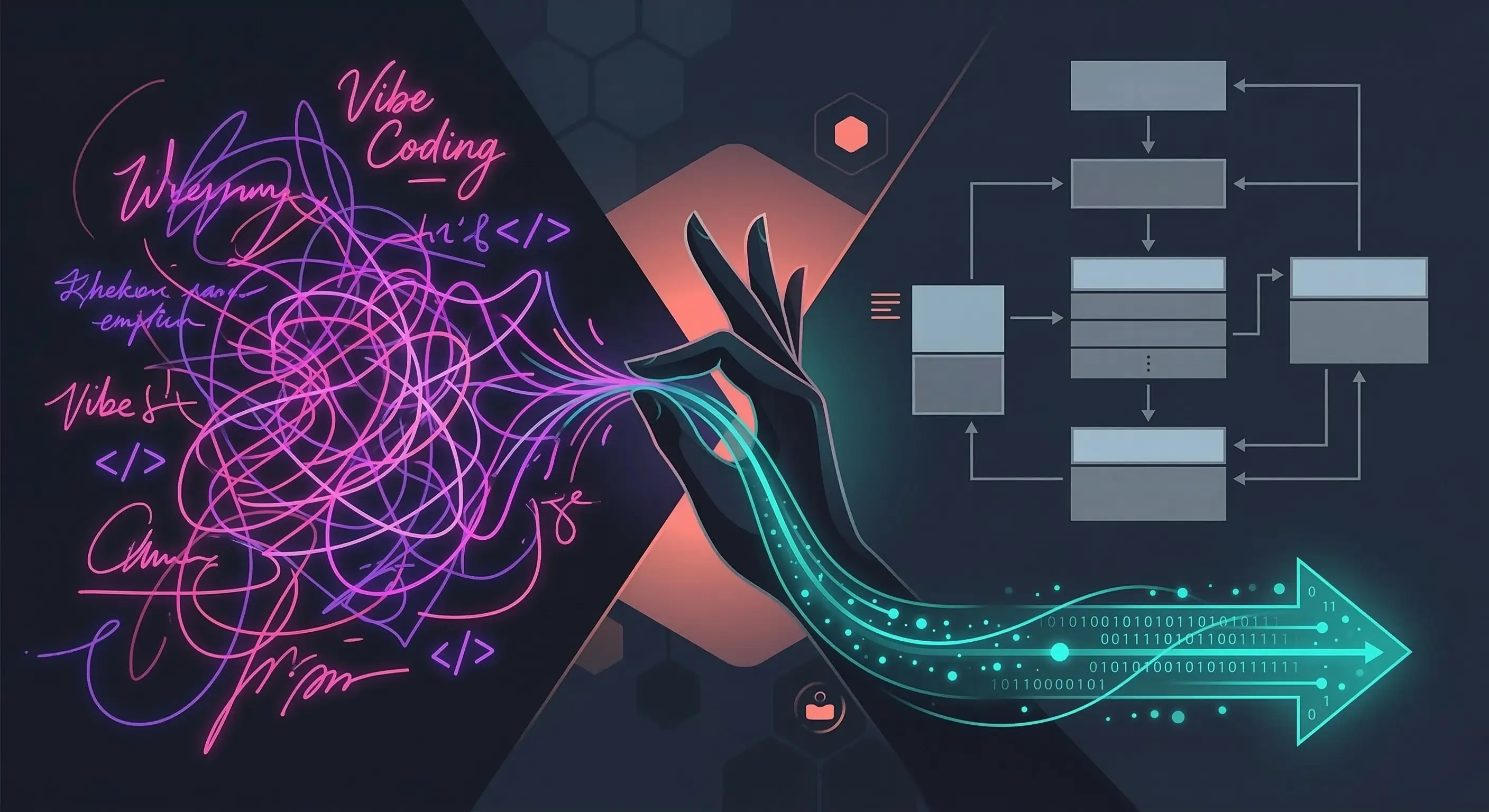
AI assisted coding in 2026 has fractured the development community into two distinct camps. Almost everyone starts out in the first camp: Vibe Coding.
Vibe coding feels incredible at first. You open your AI agent, throw in a massive prompt, and watch magic happen on your screen. You build a functional dashboard, hook up a database, and add slick animations in minutes.
But then reality hits. Your application breaks, and you have zero idea why the AI made specific architectural choices. Extending features safely becomes impossible. Every deployment feels like a gamble because vibe coding teaches dependence, not actual engineering skill.
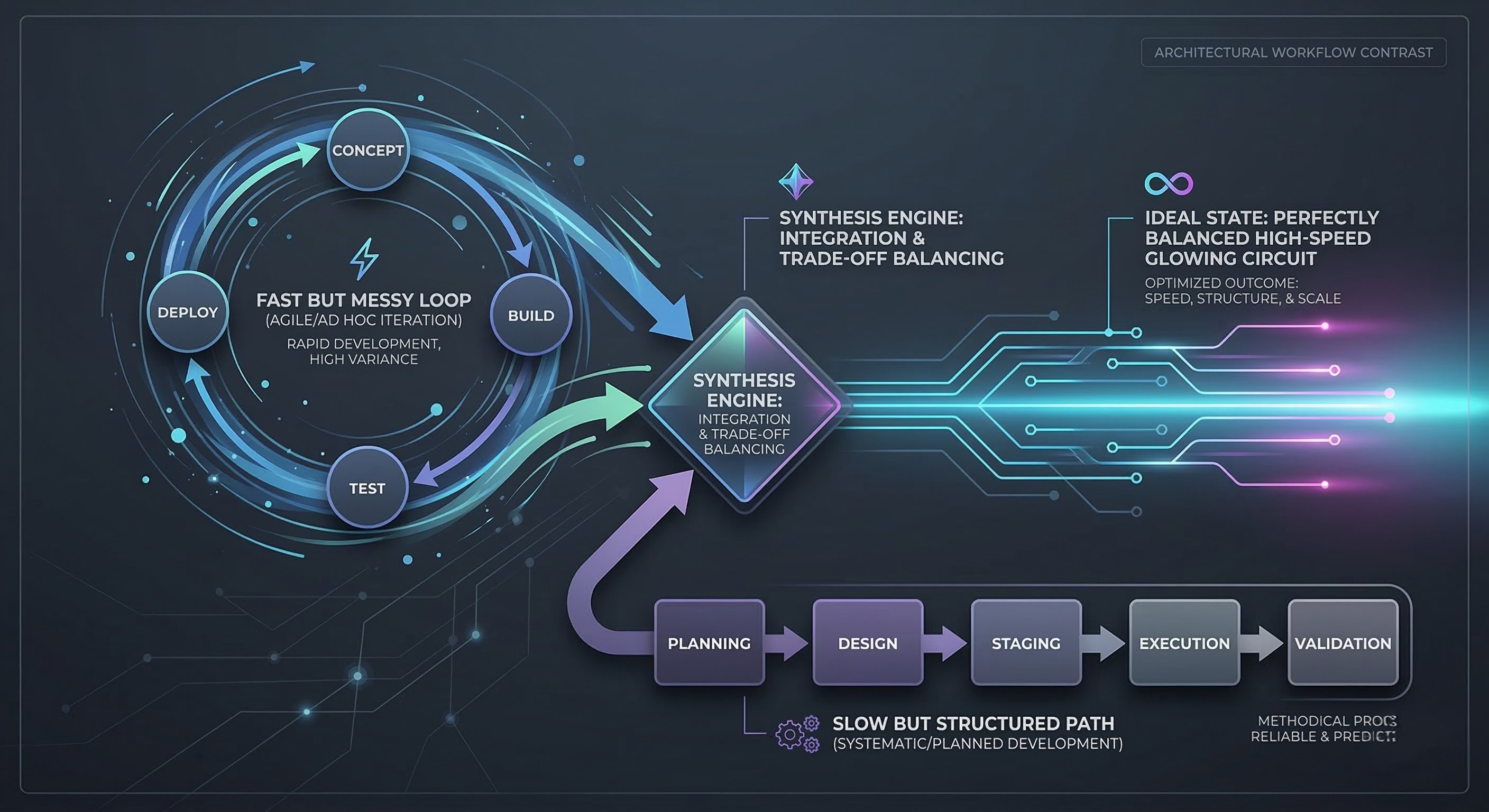
Once developers get burned by the chaos, they swing entirely in the opposite direction toward Spec-Driven Development.
Instead of random prompting, they spend hours defining exact behavioral constraints, state machines, and expected outcomes before a single line of code is written. The AI stops guessing, and your builds become 100% predictable.
The fatal flaw? You are now mastering documentation instead of software delivery. Real-world projects are rarely predictable. Product requirements shift mid-sprint. Pure spec-development destroys the iteration speed that makes AI valuable.
| Methodology | Delivery Speed | System Reliability | Core Weakness |
|---|---|---|---|
| Vibe Coding | Extreme | Very Low | Creates unmaintainable black-box systems. |
| Spec-Driven | Very Slow | High | Rigid structure destroys rapid prototyping. |
| Hybrid Direction | High | High | Requires deep architectural knowledge. |
The Real Skill: Hybrid AI Direction
If you want to survive as a modern engineer, the only skill you need is Hybrid AI Direction. This means knowing exactly when to let the AI explore and when to violently constrain it.
This methodology boils down to three distinct phases. If you master these, you will outperform developers with a decade more experience. For a complete guide on aligning these skills, check out our Full Stack AI Engineer Roadmap.
Phase 1: Problem Framing
When I start a new client build, I completely refuse to ask the AI to generate code right away. I start entirely with high-level conversation. I explain the business problem, demand trade-offs, and challenge the model's baseline assumptions.
You are teaching the AI agent how to think about the architecture before it touches your codebase. If you skip this, the model defaults to the most generic, highly-voted StackOverflow patterns from years ago.
Phase 2: Iteration Control
Next comes controlled experimentation. Keep things deliberately lightweight. Use entirely fake data, isolate the frontend, and run fast feedback loops. You are learning the system's edge cases without heavy infrastructure slowing you down.
When we run these rapid iterations at the agency, we avoid bloated serverless providers entirely. We rely on raw VPS instances to keep feedback loops tight and costs predictable. Pair this approach with our guide to self-hosting via Coolify, and your iteration costs drop to near zero.
Phase 3: Precision Instruction
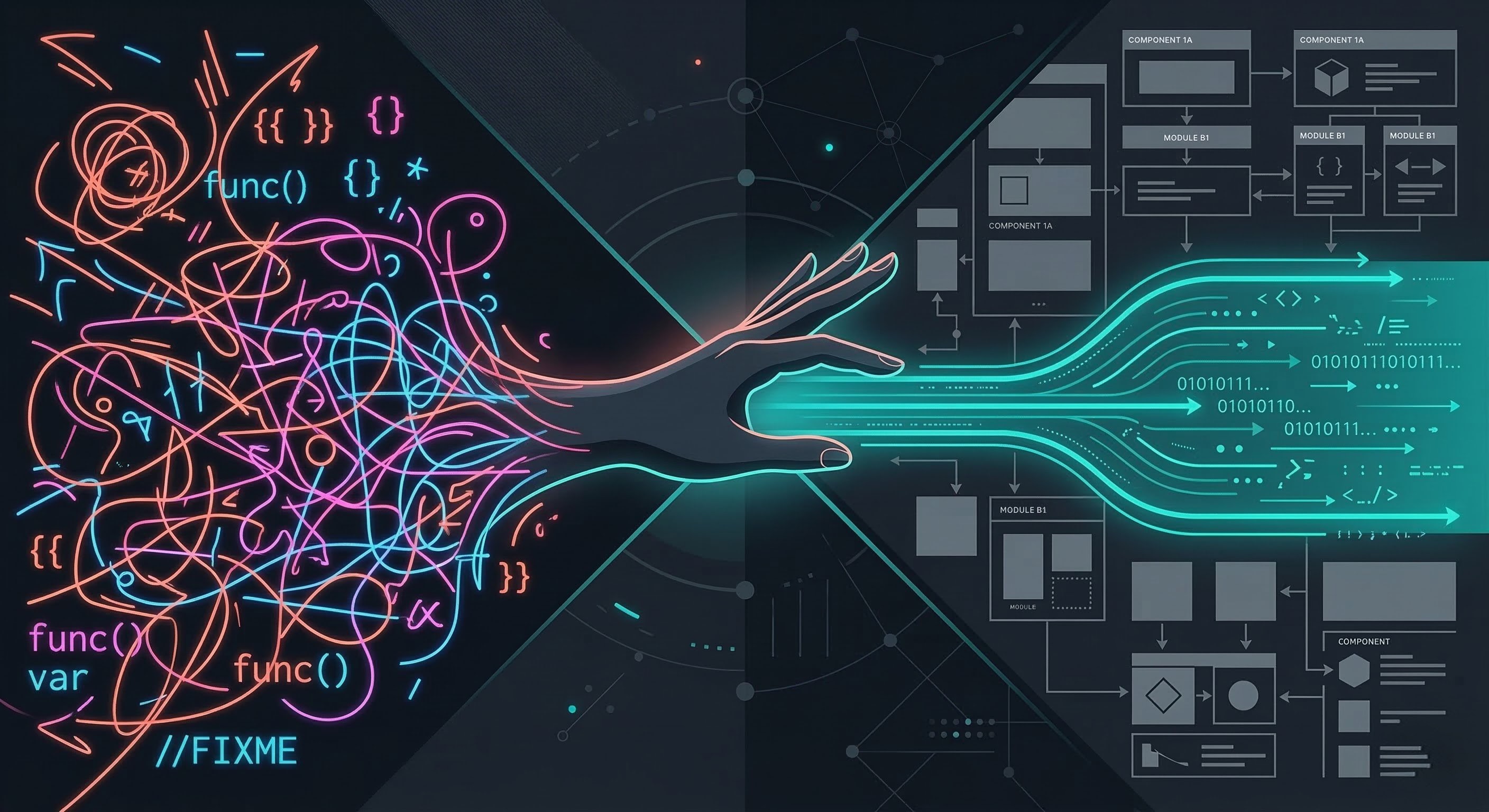
Only after the architecture is crystal clear do specs enter the chat. Instead of massive documents, we use micro-task files and strict project rules. You apply constraints surgically so the AI executes consistently without hallucinating.
This is the fundamental shift. In the past, being a skilled developer meant memorizing syntax logic. Today, being a skilled developer means designing absolute clarity. You are essentially directing a junior engineer with a 150 IQ but zero common sense.
// Example: Surgical AI constraint file (.cursorrules)
{
  "system_rules": {
    "framework": "SvelteKit 2.0",
    "css": "TailwindCSS",
    "database": "PostgreSQL via Drizzle ORM",
    "strict_typing": true,
    "forbidden_patterns": [
      "No React hooks",
      "No inline CSS styles",
      "Do not generate mock data unless explicitly requested"
    ]
  }
}
Pro Tip:
Never feed your entire codebase context to an AI when asking for a simple utility function. Oversharing context degrades the model's reasoning capabilities and skyrockets your API token costs. Keep your prompts scoped strictly to the module you are directly modifying.
Stop Grinding, Start Directing
After years of building enterprise tools with AI agents, the divide is completely obvious. Beginners beg AI for direct answers. Intermediate developers ask AI to write isolated functions. Top-tier developers design the actual thinking process of the machine.
Your primary bottleneck is no longer how fast you type code. Your bottleneck is how well you understand system design to guide an intelligence without confusing it. Stop building endless tutorial clones and start practicing Hybrid AI direction today. That is the only real moat you have left.
Something to think about:
Most developers spend years mastering syntax that AI can now generate in seconds. The engineers thriving in 2026 aren't faster coders — they are clearer thinkers. Which phase of Hybrid AI Direction are you currently stuck on: Problem Framing, Iteration Control, or Precision Instruction?
Disclosure: This article contains some affiliate links. If you sign up through them, we earn a small commission that helps keep this blog running — at no extra cost to you.